
The U.S. equities market is about to undergo its most significant structural change in decades. The SEC has conditionally approved 23×5 trading across five venues, 24X, Cboe EDGX, MEMX, Nasdaq, and NYSE Arca, with overnight sessions expected to go live on December 6, 2026. The SIP Operating Committees have filed to extend securities information processor hours to match, leaving just a one-hour nightly pause for maintenance, corporate actions, and clearing.
Much has been written about what this means for traders: access to U.S. equities from any time zone, the ability to react to overnight news in real time, and a market structure that reflects global capital flows. But there is a second-order impact for market participants and, more directly, for those who build and operate the infrastructure beneath the market. It raises the question:
What is the operational impact of a (nearly) always-on world?
It means a dramatically smaller maintenance window, longer support hours, new peak-traffic patterns, and larger sustained loads. Long-standing operational assumptions no longer apply.
At Options Technology (Options), we already host and/or support various global markets that operate under longer trading hours, including 24×7 – from FX to crypto. Our operating model is structured around three principles: redundancy, resiliency, and risk awareness.
Redundancy: Engineering Out the Single Point of Failure
This means fully redundant market data paths (for both A- and B-feeds), order routing, and connectivity across geographically dispersed data centers, with diverse carriers and routes. The failover is automatic, tested, and transparent to the client. Transparent does not mean invisible and we know that events in the underlying infrastructure must not only be managed but effectively communicated too.
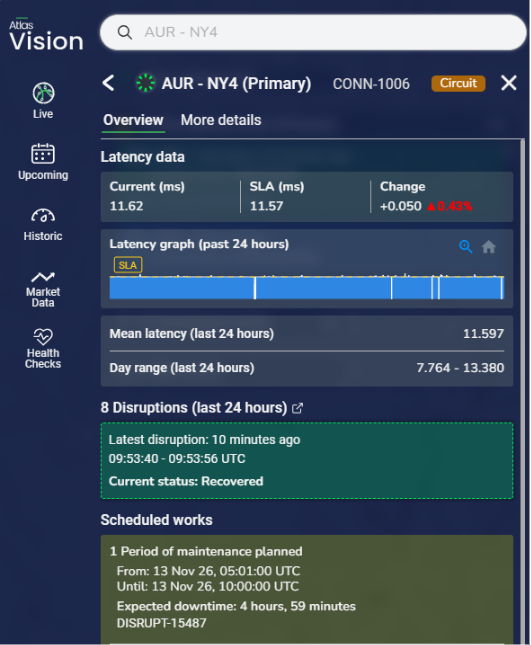
Figure 1 – AtlasVision provides clients with a wealth of information on their connectivity.
Resiliency: Operating Through the Change, Not Around It
Resiliency is organizational and operational. Always-on markets demand always-on support, not a helpdesk that waits for morning. Options operate a 24×7 follow-the-sun model with engineering-grade coverage across time zones, clear runbooks and escalation paths, and handoffs that transfer full operational context.
Automated change management, with AI assistance and manual cross-checks built in, allows us to safely plan, schedule, test and implement changes across our global network, with controlled rollback if necessary.
Continuous observability across market data, order flow, and infrastructure health means we detect drift and degradation before they snowball into production issues.
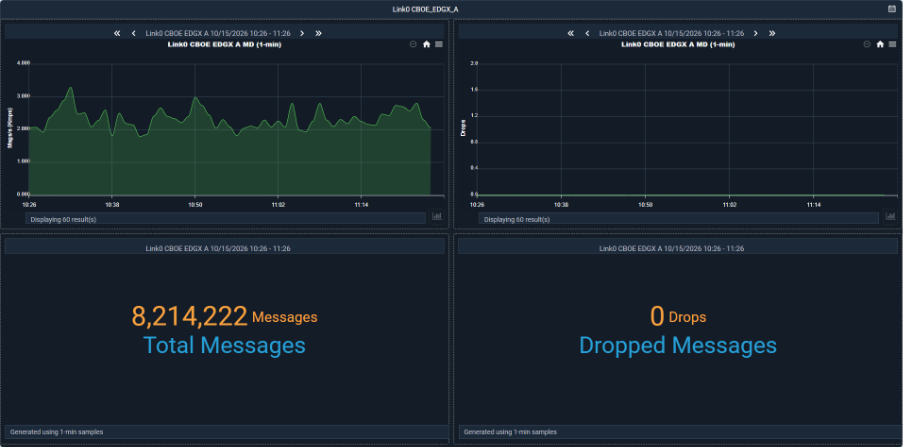
Figure 2 – AtlasInsight provides real time link and packet capture analysis
Risk Awareness: Managing the New Shape of the Trading Day
As the hours available for maintenance shrink and uptime demands rise, the need for risk awareness and management becomes paramount. The topic is also considerably more nuanced than it once was. The one-hour daily change window must be used effectively, otherwise risk builds up over the weekend. Yet, it demands careful consideration of the type, duration and risk associated with any change scheduled within it.
Always-On (or Nearly Always-On) markets also encourage us to adopt intra-day changes, once a taboo of Trading Infrastructure. The Options fully redundant, highly resilient platform coupled with custom-built automated tooling and monitoring makes this a reality today.
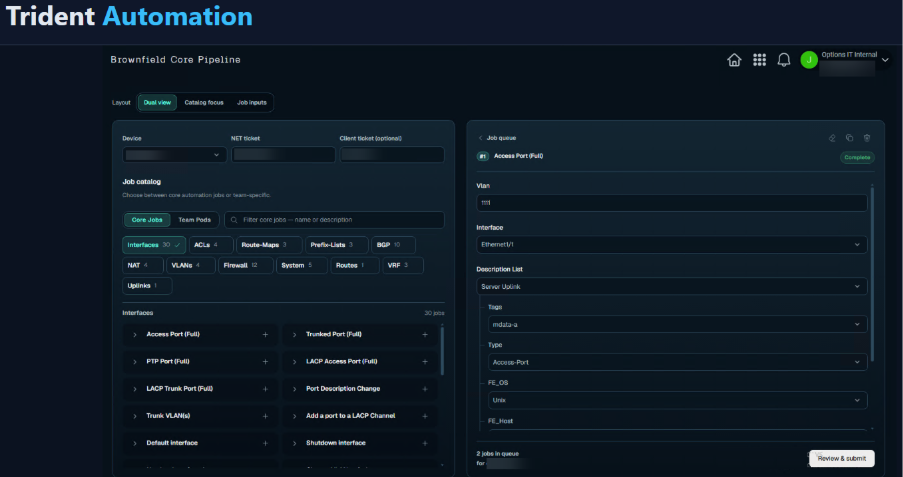
Figure 3 – Trident allows for the automated preparation, testing and execution of network changes
Operational Stability = Trading Success
23×5 is only a trading opportunity when it sits on operational stability. The firms that thrive in December 2026 and beyond will not simply be the ones that can trade longer, they will be the ones that can operate longer, with fewer surprises. At Options we say that “global finance runs here”, precisely because we understand this equation.